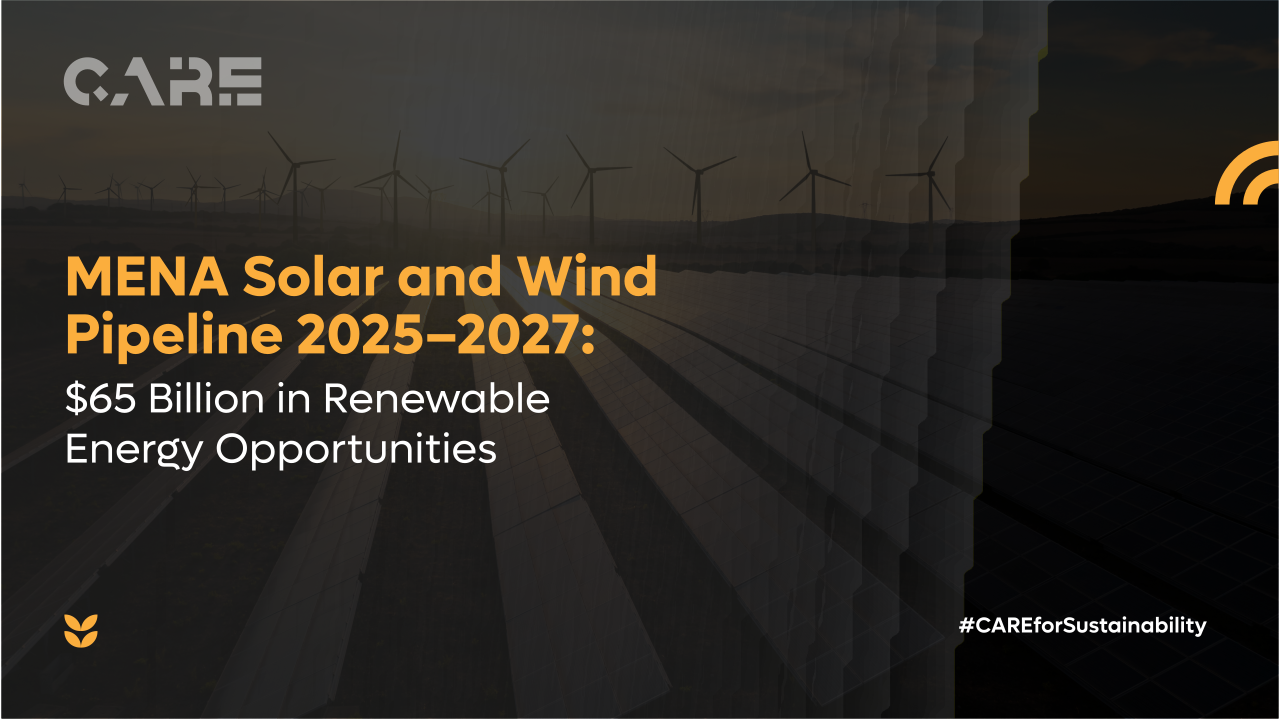
The MENA renewable energy pipeline is the finest area in the world for development. By 2027, 85% of the region’s renewable energy capacity will come from five main markets: Saudi Arabia, the UAE, Egypt, Morocco, and Oman. These nations will add more than 75 GW of additional solar and wind power, which will cost more than $65 billion to build. Saudi Arabia is at the forefront of regional growth with plans for 30 GW of capacity. This includes the 2.6 GW Al Shuaibah solar complex, the 1.5 GW Sudair Solar Park, and the 400 MW Dumat Al Jandal wind farm. The UAE, on the other hand, has big plans, including getting 14 GW from projects like the 2 GW Al Dhafra Solar complex and Masdar’s increasing international portfolio. The Suez Canal corridor in Egypt is becoming a centre for renewable energy. It has a 10+ GW pipeline that includes agreements with Siemens Energy, Scatec, and ACWA Power. Morocco, on the other hand, is adopting a more comprehensive strategy by building infrastructure for exporting green hydrogen to European markets along with 4.5 GW of solar and wind projects. This unprecedented concentration gives EPC contractors, equipment suppliers, project developers, and investors who want to get into the world’s fastest-growing renewable energy market with government support, low financing costs, and easy access to high-demand European and Asian export markets.
There will be a lot of chances to work on solar projects in the near future. As an example, 45 GW of photovoltaic capacity will be put into use between 2025 and 2027. This will use MENA’s great solar resources, which average 2,200+ kWh/m²/year, and will lead to record-low energy costs of less than $0.015/kWh in competitive auctions. Saudi Arabia’s NREP program buys more than 8 GW via reverse auctions that attract multinational companies, including EDF Renewables, Marubeni Corporation, and JinkoSolar. The UAE’s independent power producer (IPP) model enables private enterprises to join in by granting 25-year PPAs that guarantee income and make the projects bankable. Egypt’s feed-in tariff scheme is evolving to a system where companies may bid on utility-scale projects. The Benban Solar Park expansion will add more than 1 GW of power. In Morocco, MASEN is in charge of integrated solar projects that use thermal storage to create clean energy 24 hours a day, seven days a week. These projects combine photovoltaic (PV) and concentrated solar power (CSP). More and more people are using bifacial modules, single-axis tracking systems, and powerful inverters that function best in hot desert environments. Also, plants with more than 200 MW of power must include energy storage. This will offer a $5 billion battery industry potential through 2027.
Wind energy projects are in the works for 30 GW of projected capacity in coastal regions and mountain corridors, where there are a lot of wind resources and capacity factors around 45%. This is a chance for turbine producers, tower suppliers, and specialist installation companies to spend $20 billion. The Gulf of Suez wind corridor in Egypt wants to add more than 7 GW of power with projects from Masdar, Lekela Power, and European companies. On the other hand, Morocco’s Atlantic coast contains more than 2 GW of wind-solar facilities that make the most of renewable energy production profiles. The Dumat Al Jandal project is now up and going, thus Saudi Arabia’s wind initiative is advancing quicker. This has led GE Renewable Energy, Vestas, and Siemens Gamesa to provide turbines and sign long-term servicing contracts. At the same time, Oman’s Dhofar area is using monsoon winds to build more than 2 GW of capacity. Egypt, the UAE, and Saudi Arabia are all looking at the possibility of building offshore wind farms with a capacity of 5 GW or more. This suggests that offshore wind has promise. At the same time, the possibility of repowering old wind farms creates new market segments that will support technical improvements and capacity growth until 2027 and beyond.
There are many different types of funding available for investments and partnerships. These include development finance institutions (which have committed $15 billion or more), commercial project finance (which has arranged $25 billion or more), sovereign wealth funds (which have allocated $10 billion or more), and private equity (which has deployed $8 billion or more). All of these use equity and debt instruments to help projects move from financial close to commissioning. When regional developers like ACWA Power, Masdar, and Taqa work with global technology leaders like Siemens Energy, Vestas, and First Solar, they can exchange expertise, decrease technical risks, and make sure that projects are finished on time. At the same time, companies including Samsung C&T, SEPCOIII, and Larsen & Toubro are bidding for civil works, electrical systems, and grid integration contracts worth $30 billion or more. The concentrated project pipeline is a great way for international companies to get involved in renewable energy in the MENA region. This is because the government supports it, the procurement processes are clear, the returns are competitive (7–12% IRR typical), the legal frameworks are strong, and the market is strategically positioned. The MENA area is the world’s fastest-growing renewable energy market. It has proven execution skills, plans to add a lot of capacity by 2030, and long-term export potential to European and Asian countries that require clean energy imports to satisfy their decarbonisation targets.