Executive Summary
The climate tech market globally is growing sharply with a projected Compound Annual Growth Rate (CAGR) of ~24-25% from 2025 through ~2032/2035.
In the MENA & Turkey region, venture capital (VC) investment in climate tech has reached US$651 million over 2018-2022, across ~148 startups.
The UAE leads regionally, attracting ~62% (≈ US$401 million) of that funding.
Key sectors: agriculture / agri-tech, clean energy/renewables, energy storage, sustainable mobility, water tech. These are driven by both climate urgency and commercial viability.
Major forces shaping ecosystem: rising government targets for net zero/carbon neutrality, COP28 momentum, emergence of large climate-fund platforms (public & private), and regional investor interest rising.
Geographic & Sectoral Breakdown
Leading Countries
UAE: Dominates in funding attracted (≈ US$401 million of the US$651 million in 2018-22) across ~45-50 deals. Highest growth in climate tech startup deals.
Turkey: Second in deal-count (highest number of startups), though lower total dollars than the UAE.
Saudi Arabia, Egypt, Tunisia: Also seeing increasing activity, though still significantly behind the UAE. Saudi: ~ US$68 million since 2018; Egypt ~ US$42 million; Tunisia ~ US$6 million
Key Sectors & Technologies
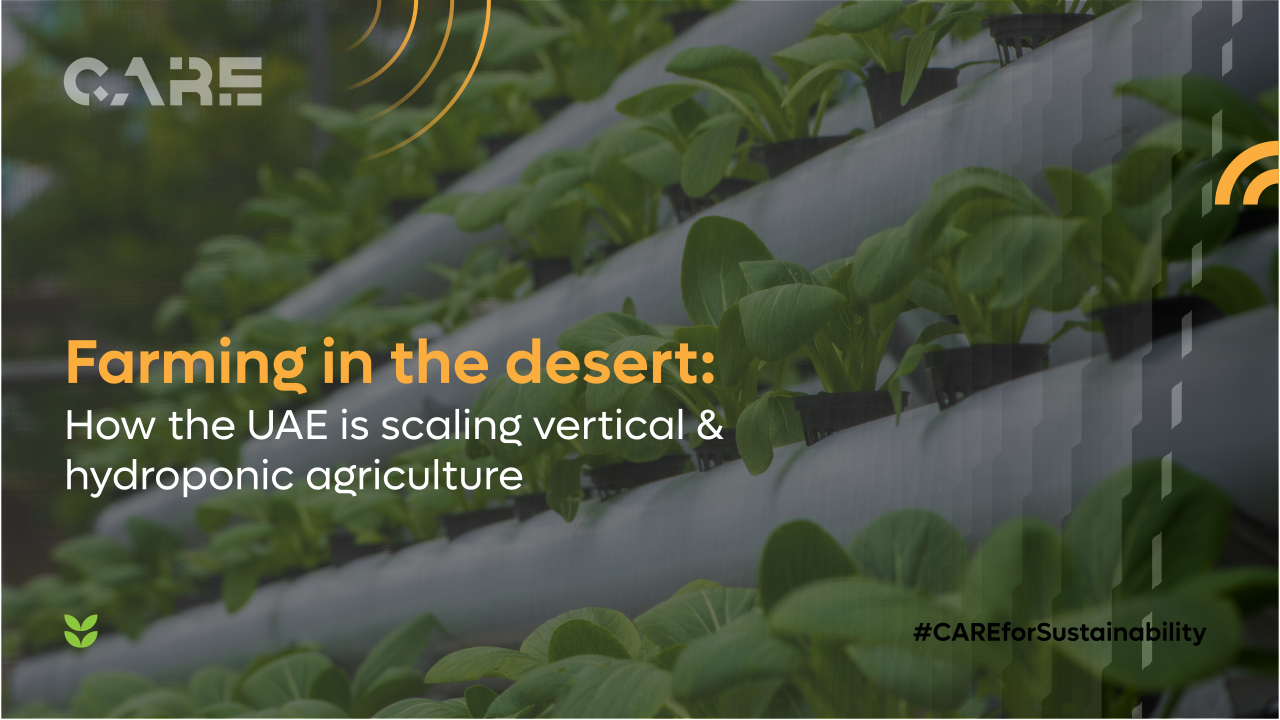
Agriculture & Agri-tech: Especially vertical farming, precision farming, climate resiliency, drought-/salinity-tolerant crops. Investors like that these solutions address both food security and climate risk.
Renewable Energy & Clean Power: Solar, wind, hybrid systems, plus off-grid solutions. MENA has high solar potential; energy policy & subsidies supporting this.
Energy Storage & Grid Infrastructure: Batteries, smarter grids, and demand response are becoming critical as renewables scale.
Water Tech & Desalination: Given water scarcity across many MENA countries, tech for water reuse, desalination, and water efficiency emerges.
Mobility / EVs / Clean Transport: Though less mature than energy/food sectors, mobility shows strong promise, especially with government interest (subsidies, regulation).
Carbon Capture, Utilisation, Storage (CCUS), and Green Hydrogen: Still early-stage in many countries, but increasing policy & investment interest.
Investment Trends & Drivers
Public policy & regulation: COP28 and national climate plans (e.g. Saudi Vision, UAE net zero goals) are pushing demand and investment.
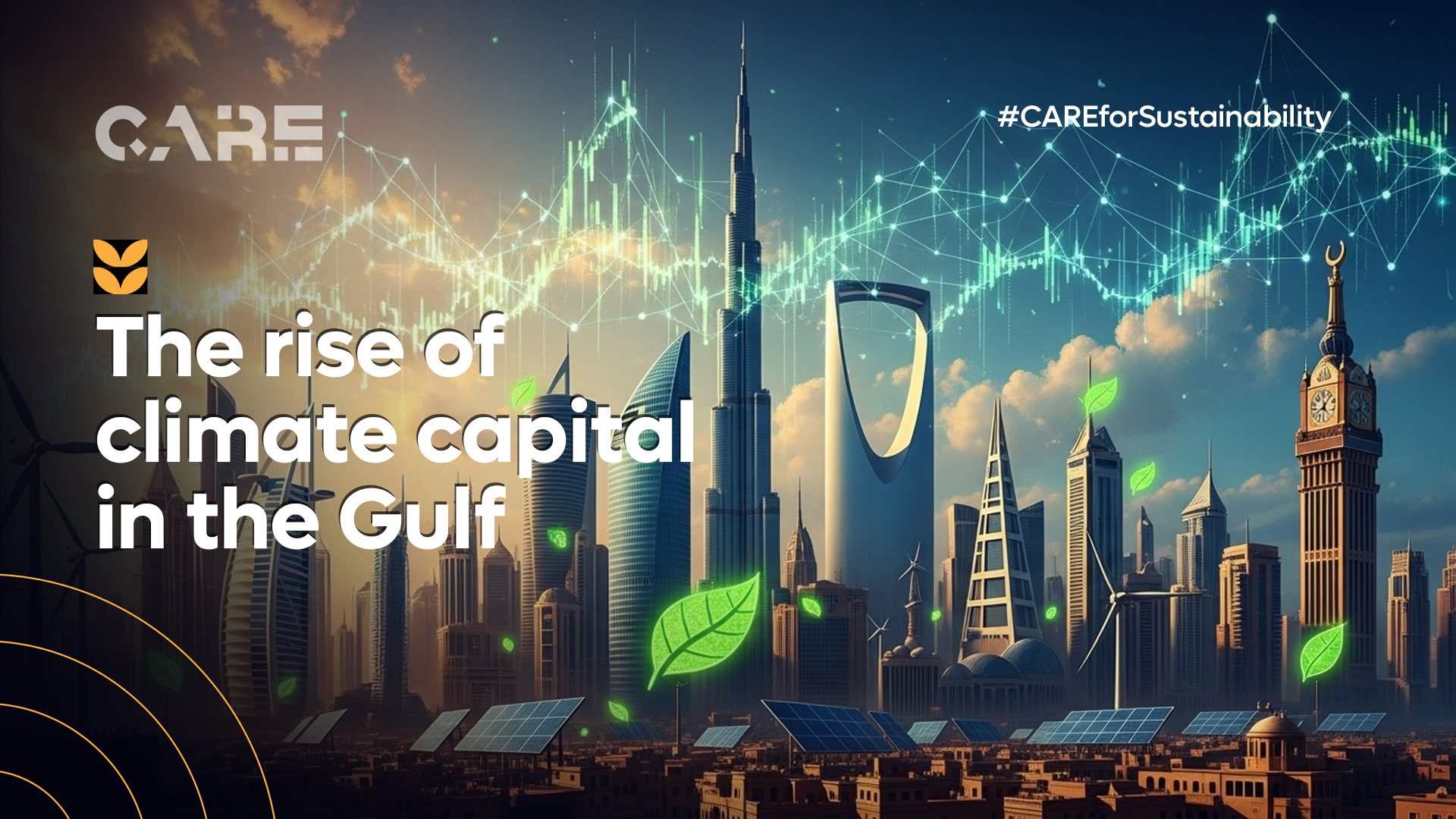
Large funds & platforms: Establishment of big climate tech investment funds (e.g., ALTERRA in the UAE, government of Abu Dhabi deals, etc.).
Private sector & sovereign wealth participation: SIFs (sovereign investment funds), family offices, and regional funds are increasingly active.
Technology & cost declines: As solar, batteries, smart sensors, AI for climate solutions become cheaper, more scalable.
International collaboration & co-investment: Many startups in MENA are seeking international partners, grants, or foreign investors to scale.
Challenges & Barriers
Funding gap & volatility: Although growth is strong, the total amounts remain small relative to what’s needed; investment declined in some years (global economic headwinds).
Early-stage startup risks: Lack of proven business models, regulatory uncertainty, policy inconsistency, and market demand risk.
Talent & technical expertise: Skilled personnel in AI, climate engineering, and regulatory know-how are limited in some markets.
Infrastructure & energy systems constraints: Grid integration, permitting, logistics, quality of inputs.
Regulatory & policy risk: In some states, unclear incentives, subsidies, tenure, or policies around land/permits, import tariffs etc.
Access to markets & scaling beyond local: Scaling across borders often is hard due to trade barriers, language, and standards.
Case Studies
UAE – Startup growth & mega funds
UAE climate tech startups have grown at a CAGR of ~120% over 2018-2022, double that of Turkey (~60%) in the same period. The UAE also saw major investments such as a large equity investment into EV manufacturer NIO through Abu Dhabi-based CYVN Holdings, a mega deal in Zap Energy, and the founding of ALTERRA climate-focused fund (~US$30B target).
Saudi Arabia
While Saudi Arabia has less in total dollars than the UAE, momentum is significant under government plans (e.g., Vision 2030) to diversify the economy, push renewables/green hydrogen. Also increasing number of climate tech startup deals.
Turkey
High number of deals but lower per deal funding; strong in agriculture, sustainable materials, and possibly water tech. Good stepping stone for scale to Europe / Asia.
Projections & Forecast: MENA 2025-2030
Assuming the global climate tech CAGR (~24.6%) translates proportionally with some lag to MENA:
MENA climate tech startup funding could reach US$1.5-2.5+ billion cumulatively for 2025-2028, if current trends accelerate, policy support strengthens, and international investment flows more freely.
Number of startups: Expect growth beyond 250-300 active climate tech startups by 2028 (from ~148 in 2018-2022) in MENA/Turkey.
Sector shifts: Green hydrogen, CCUS, carbon markets, energy storage expected to pick up more capital share; agri tech may moderate slightly as early easy wins get saturated.
Geographic shift: Countries with strong fossil revenue (UAE, Saudi Arabia, Qatar) and stable governance will lead investment; others (e.g. Egypt, Morocco, Jordan) may become hubs for specific niches / low-cost labour/agriculture.
Strategic Recommendations
For Entrepreneurs / Startups
Build clear, measurable climate impact metrics; be ready to show ROI / emissions reduction/sustainability credentials.
Seek partnerships with governments, multilateral agencies, NGOs for grants, pilot programs.
Focus on scalability & cost-effectiveness; solutions that adapt to local infrastructure constraints.
Emphasise cross-border potential; localisation is good, but regional expansion can drive larger returns.
Consider blended financing (equity + grants, concessional capital) to derisk early growth.
For Investors
Be patient, since early climate tech often has longer ROI horizons; expect regulatory / policy risk.
Support entire value chains, not just product end-users (e.g. component manufacturing, supply logistics).
Use funds & structure that allow long-term investments (e.g. growth stage, not just seed).
Leverage public-private co-investments; use government incentives/policy alignment to de-risk.
For Policymakers & Governments
Strengthen and stabilise policy frameworks: renewable tariffs, net-zero targets, subsidies, permit regimes.
Offer incentive schemes specifically for climate tech: grants, tax breaks, carbon pricing.
Invest in technical training, R&D facilities, and incubators to build local capacity.
Facilitate regulatory harmonisation (across states in the region) to allow market expansion.
Promote international cooperation and trade in climate tech, and encourage foreign direct investment (FDI).
Forecasted Trajectory (Graphs / Models)
A projected funding curve for MENA climate tech over 2025-2030 under baseline, optimistic, and accelerated scenarios.
Mapping of top-10 startups by sector & country with projected funding and milestones.
Estimates of emissions reduced / renewable capacity added by climate tech startups if moderate scaling is achieved.
Risks & What to Watch
Macroeconomic risks: inflation, interest‐rate hikes, and energy price volatility.
Political/regulatory instability.
Supply chain disruptions (materials, components).
Climate regulatory backlash or policy reversals.
Competition from other regions (Asia, Europe) could draw away investment/talent.
Conclusion
The MENA climate tech startup ecosystem is at a pivotal moment in 2025. With the global climate tech market growing ~24.6% yearly and increasing investor attention, opportunities abound. The UAE currently leads strongly; Saudi Arabia and Turkey are catching up. To seize growth, startups must align with policy, deliver measurable impact, and scale intelligently. Investors & governments that build supportive, stable, and forward-looking environments will unlock decarbonisation, sustainability, and economic returns across the region.